

Kneecap – Interview with Mo Chara and Móglaí Bap – LSQ
“Kneecap was born out of this need to represent the identity of young people who speak Irish in the city, an identity a lot of people around the world wouldn’t know exists,” says Móglaí Bap of Irish hip-hop trio Kneecap. “When I was growing up, you wouldn’t have seen the language on mainstream radio or BBC1 or in the cinemas, so as a teenager it wouldn’t have been that cool to speak Irish. So Kneecap was part of pushing that boundary and seeing what we could do, and also having a bit of craic, as we say.”
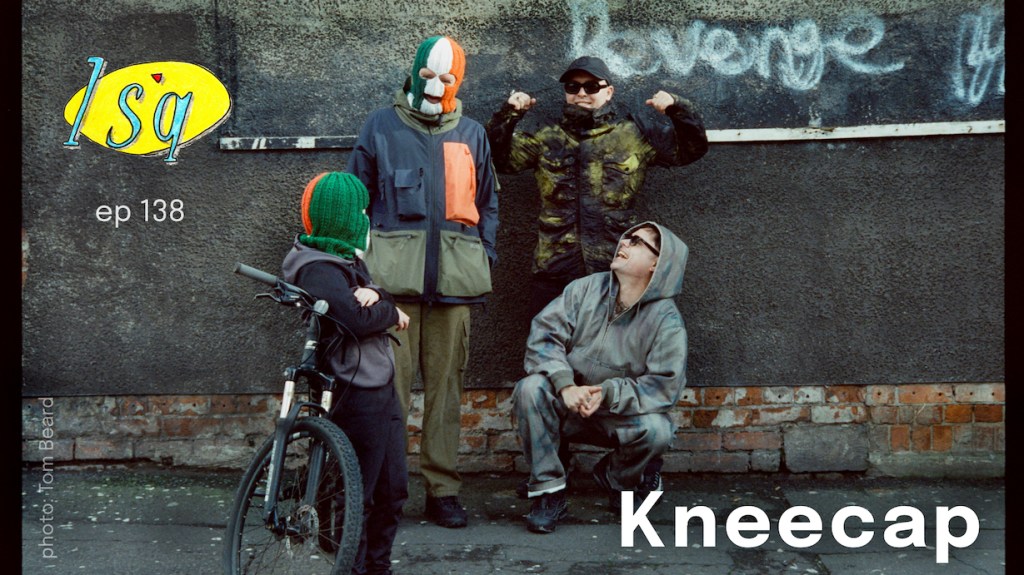
In the lead up to their powerful new album, Fenian, Móglaí and bandmate Mo Chara joined me via Zoom for an in-depth discussion of their history. They talked about how the project evolved from being something they did initially for laughs and to get free tickets to festivals into a part of their larger fight against the marginalization of the Irish-language, of which they’re native speakers, and their desire to raise awareness of the harms caused by colonialism worldwide. We also discussed their childhood: Móglaí’s memories of hearing his mother play traditional Irish music on her concertina, Mo Chara’s teenage experiences learning Oasis and Stone Roses songs on guitar at a Belfast youth club, how they found each other within the Irish-language community and started making music together, and how their approach to Kneecap has evolved since then. For the uninitiated, in addition to listening to Fenian and their previous album, Fine Art, I also highly recommend watching the biographical film Kneecap, which is funny and dramatic and poignant and a mix of fact and fiction, starring the band as themselves. It’s awesome and it’s available on Netflix, Apple TV and beyond.


